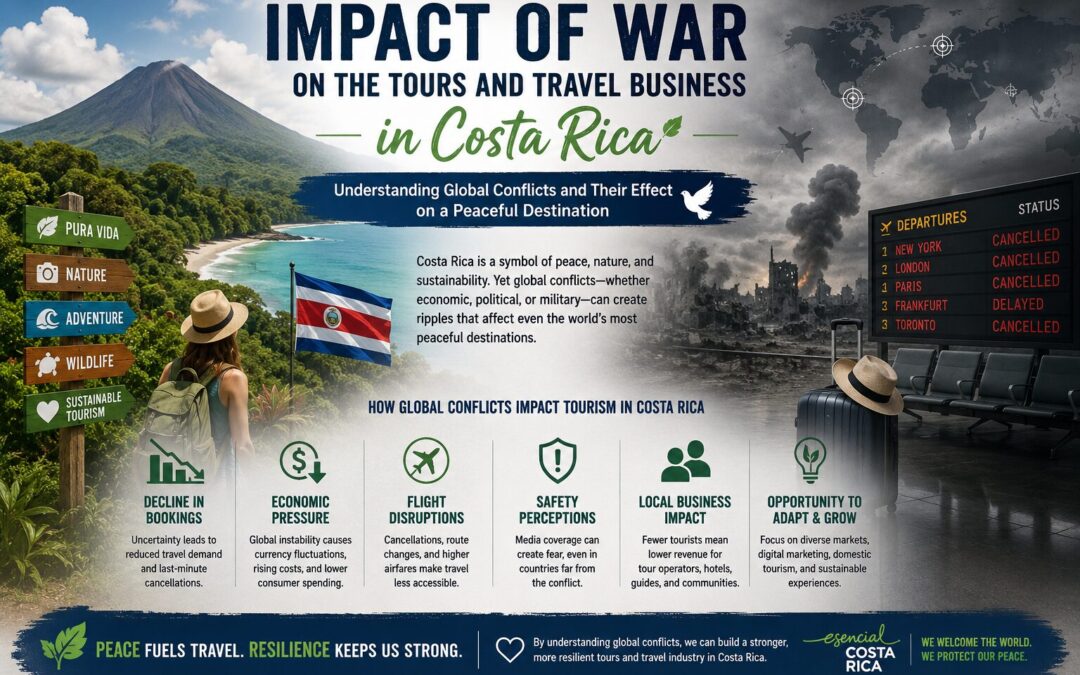
Understanding Global Conflicts and Their Effect on a Peaceful Destination
Costa Rica is globally recognized as a peaceful nation with no standing army and a strong focus on sustainability and tourism. Its economy relies heavily on international visitors who come to experience its beaches, rainforests, wildlife, and adventure activities. However, even though Costa Rica itself remains politically stable, global conflicts and wars can significantly impact its tours and travel industry.
This blog explores how wars in different parts of the world influence tourism demand, travel behavior, and the overall business environment in Costa Rica.
Costa Rica’s Dependence on Tourism
Tourism is one of the primary drivers of Costa Rica’s economy. A large portion of visitors come from North America and Europe—regions that are often directly or indirectly affected by global conflicts.
When war or geopolitical instability occurs, it creates ripple effects that reach even the most peaceful destinations, including Costa Rica.
Decline in International Travel Demand
Economic Uncertainty
Wars often lead to global economic instability. Rising inflation, fuel prices, and financial uncertainty cause travelers to reduce discretionary spending, including international vacations.
Reduced Consumer Confidence
People are less likely to travel long distances during times of global tension. Safety concerns and uncertainty discourage leisure travel, especially to destinations that require long-haul flights.
Impact on Key Source Markets
If major tourist markets are directly affected by war, outbound travel drops significantly, leading to fewer visitors arriving in Costa Rica.
Rising Airfare and Travel Costs
One of the most immediate impacts of war is the increase in fuel prices. Aviation fuel costs rise sharply during geopolitical conflicts, which leads to:
- Higher airfare for international flights
- Reduced flight frequency
- Limited travel options
As travel becomes more expensive, Costa Rica—being a long-haul destination for many travelers—can experience a decline in bookings.
Supply Chain Disruptions
Global conflicts disrupt supply chains, affecting the availability and cost of goods and services in Costa Rica.
Effects on the Tourism Industry
- Increased costs for hotel operations
- Higher prices for food, beverages, and imported goods
- Increased transportation and logistics expenses
These rising costs often translate into higher prices for tourists, potentially reducing demand.
Currency Fluctuations and Spending Behavior
Wars can cause volatility in global currencies. This impacts both tourists and local businesses.
- A weaker currency in source markets reduces tourists’ purchasing power
- Fluctuations make travel budgeting uncertain
- Tourists may shorten their trips or spend less during their stay
For Costa Rica, this can mean lower overall tourism revenue even if visitor numbers remain stable.
Shift in Travel Preferences
During times of conflict, traveler behavior changes significantly.
Preference for Nearby Destinations
Tourists often choose destinations closer to home rather than long-haul international travel.
Focus on Safety and Stability
Costa Rica benefits from its reputation as a safe and peaceful country, which can make it more attractive compared to unstable regions.
Increase in Nature-Based Tourism
Travelers may prefer destinations that offer outdoor, less crowded experiences—an area where Costa Rica excels.
Impact on Tour Operators and Travel Businesses
Tour operators, travel agencies, and hospitality businesses in Costa Rica are directly affected by global conflicts.
Reduced Bookings
Fewer international travelers lead to cancellations and lower occupancy rates.
Pricing Pressure
Businesses may need to offer discounts or promotions to attract tourists, impacting profit margins.
Operational Challenges
Rising costs and uncertain demand make it difficult to plan and manage operations effectively.
Opportunities Amid Challenges
Despite the negative impacts, global conflicts can also create certain opportunities for Costa Rica’s tourism sector.
Safe Haven Destination
Costa Rica’s peaceful image can position it as a preferred destination during uncertain times.
Domestic Tourism Growth
Local tourism may increase as international travel declines.
Digital Nomad Market
Remote workers may choose Costa Rica for longer stays, especially if they seek stability and natural surroundings.
Long-Term Impact on the Industry
While wars can cause short-term disruptions, Costa Rica’s tourism industry has shown resilience over time.
Recovery Trends
- Tourism demand typically rebounds after global stability improves
- Travelers often return with increased interest in nature and wellness destinations
- Strong branding and sustainability efforts support long-term growth
Costa Rica’s consistent appeal helps it recover faster compared to less established destinations.
Strategies for Tourism Businesses
To navigate the impact of global conflicts, businesses in Costa Rica can adopt several strategies:
Diversify Target Markets
Reduce dependence on a few key countries by attracting visitors from different regions.
Flexible Pricing and Policies
Offer competitive pricing, flexible cancellations, and attractive packages.
Focus on Value and Experience
Highlight unique experiences, eco-tourism, and personalized travel options.
Strengthen Online Presence
Digital marketing and direct bookings can help businesses reach a wider audience.
Final Thoughts
While Costa Rica remains a peaceful and stable destination, it is not immune to the global effects of war. Economic uncertainty, rising travel costs, and shifting traveler behavior can all impact the tours and travel industry.
However, Costa Rica’s strong reputation, natural beauty, and adaptability allow it to withstand these challenges and recover over time. For tourism businesses, understanding these global dynamics and adjusting strategies accordingly is key to long-term success.
Even in uncertain times, Costa Rica continues to stand out as a destination that offers safety, tranquility, and unforgettable experiences—qualities that travelers value more than ever.
Contact us:
Phone: 506 8875 6262
Email: info@fastcr.com
WhatsApp: + (506) 8875-6262